Biological weathering: a critical review from geomorphology and climatology
DOI:
https://doi.org/10.54288/yotantsipanko.v5i2.59Keywords:
Geomorphology, Climate, Scientific terminology, Earth science, EnvironmentAbstract
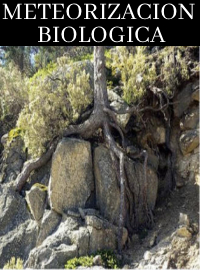
This article questions the appropriateness of considering “biological weathering” as an autonomous category within rock alteration processes. Based on a critical review of geomorphological and geological literature, it is argued that living organisms — from roots to microorganisms — do not generate a new type of weathering, but rather act as facilitators or intensifiers of pre-existing physical and chemical processes, which are ultimately driven by long-term climate. Furthermore, the logical inconsistency of classifying biological activity as a “type of weathering” without similarly categorizing other transformative agents — such as earthquakes, glaciers, or meteorite impacts — is discussed. The article proposes replacing the term “biological weathering” with more precise expressions, such as biological facilitation of weathering or biogeomorphological intervention, which acknowledge biological influence without compromising the conceptual coherence of the established geological framework.
Downloads
References
Bockheim, J. G., & Hartemink, A. E. (2014). Soil-forming factors and Soil Taxonomy. Geoderma, 226–227, 231–237.
https://doi.org/10.1016/j.geoderma.2014.02.016 DOI: https://doi.org/10.1016/j.geoderma.2014.02.016
Butler, D. R. (1995).
Zoogeomorphology: Animals as geomorphic agents. Cambridge University Press.
ISBN 978-0-521-03932-1
Fairbridge, R. W. (Ed.). (1997). Encyclopedia of geomorphology. Springer.
https://doi.org/10.1007/3-540-31060-6 DOI: https://doi.org/10.1007/3-540-31060-6
González Hidalgo, J. C., & Martínez-Casanovas, J. A. (2010). Clima y geomorfología: Interacciones y escalas temporales. Cuadernos de Investigación Geográfica, 36(1), 15–33. https://doi.org/10.18172/cig.1235
Goudie, A. (2020). Geomorphology: A very short introduction. Oxford University Press. ISBN 978-0-19-883334-9
Goudie, A., & Viles, H. A. (1997). The Earth transformed: An introduction to human impacts on the environment. Blackwell. ISBN 978-0-631-19660-0
Gutiérrez Elorza, M. (2018). Geomorfología. Editorial Síntesis. ISBN 978-84-9077-412-3
Howard, A. D., & Mitchell, R. J. (1985). Phytogeomorphology and geomorphic controls of vegetation patterns. In J. E. Thornes (Ed.), Geomorphology and vegetation (pp. 25–48). Allen & Unwin. ISBN 978-0-04-551001-0
Martínez de Azagra Paredes, A. (2006). Fundamentos de geomorfología. Editorial Mundi-Prensa. ISBN 978-84-8476-342-6
Selby, M. J. (1993). Hillslope materials and processes (2.ª ed.). Oxford University Press. ISBN 978-0-19-507778-8
Summerfield, M. A. (1991). Global geomorphology: An introduction to the study of landforms. Longman. ISBN 978-0-582-30156-4
Viles, H. A. (1988). Biogeomorphology. Basil Blackwell. ISBN 978-0-631-155007
Viles, H. A. (1995). Ecological perspectives on rock surface weathering: Towards a conceptual model. Geomorphology, 13(1–4), 21–35. https://doi.org/10.1016/0169-555X(95)00024-Y DOI: https://doi.org/10.1016/0169-555X(95)00024-Y
Zalasiewicz, J., & Waters, C. N. (2018). The Anthropocene and the meaning of “weathering”. En Geological Society, London, Special Publications (Vol. 491, No. 1, pp. 27–38). The Geological Society of London. https://doi.org/10.1144/SP491.10
Downloads
Published
Issue
Section
License
Copyright (c) 2025 John Jaime Huahuachampi Huallpa

This work is licensed under a Creative Commons Attribution 4.0 International License.